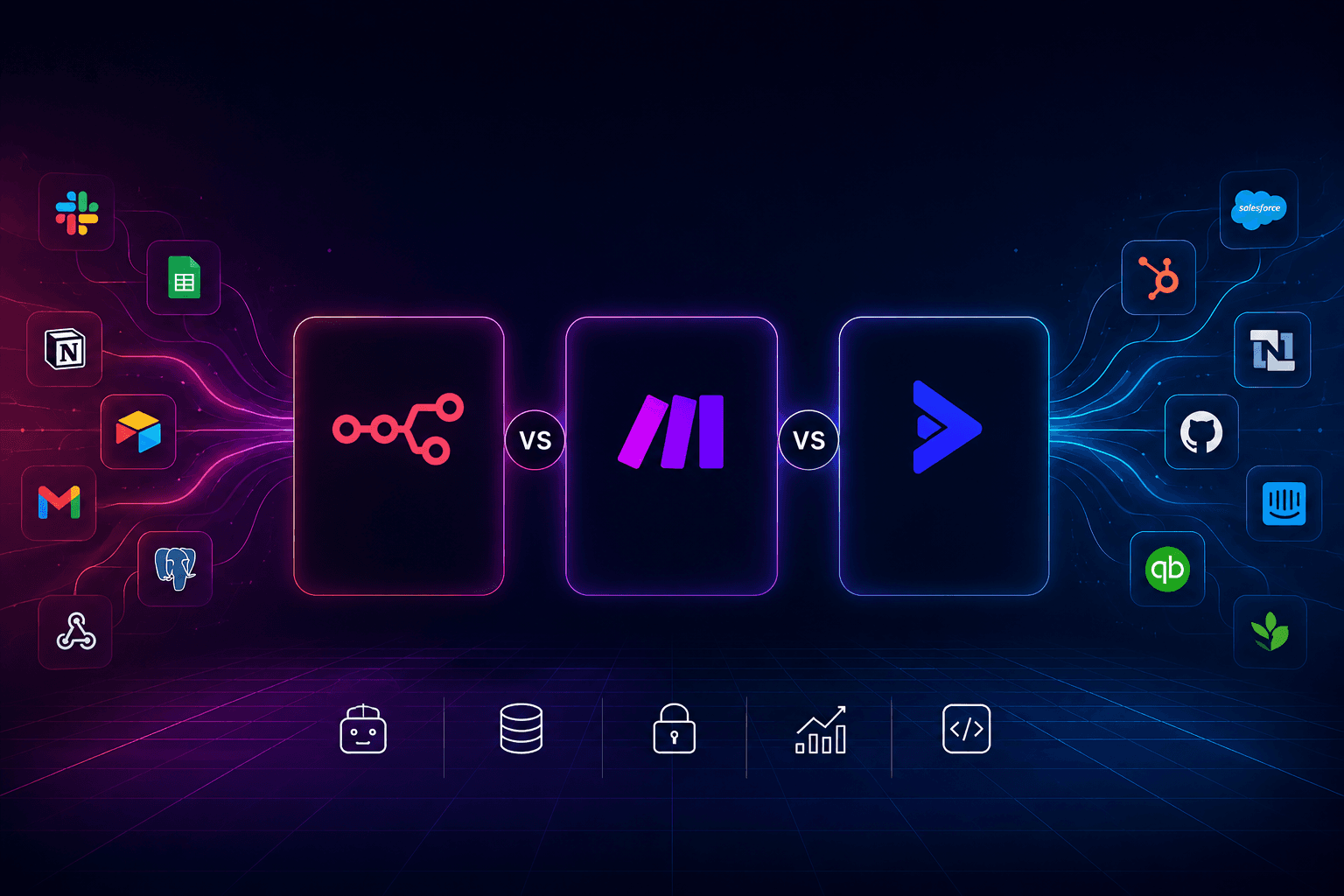
Automation has evolved far beyond simple task chaining. In 2026, businesses are no longer just connecting apps - they are building scalable digital ecosystems designed to reduce operational costs, improve efficiency, and create competitive advantages through smarter infrastructure. At unamas.io, we see one recurring challenge for startups, agencies, and modern businesses:
Which automation platform should you actually build on?
With platforms like n8n, Make, Merge, Zapier, and Workato all competing for attention, choosing the right solution depends on more than ease of use. It comes down to flexibility, ownership, scalability, and future-proofing your business.
The Rise of Strategic Automation
Modern automation platforms serve different purposes:
Workflow automation
API integration
SaaS infrastructure
AI orchestration
Internal operational scaling
Choosing incorrectly can create technical debt, higher long-term costs, and infrastructure limitations.
Choosing correctly can dramatically accelerate growth.
n8n - The Open Infrastructure Leader
n8n has become one of the strongest choices for businesses seeking maximum control.
Its open-source architecture and self-hosting capabilities make it particularly attractive for companies building proprietary systems or AI-powered workflows.
Why n8n stands out:
Open-source flexibility
Self-hosting and full data ownership
Highly customizable workflows
API-first architecture
Native AI integrations
Lower operational costs at scale
Ideal for:
SaaS builders
Agencies
AI agent systems
Custom internal tooling
ERP and CRM automations
Potential limitations:
More technical setup
Slightly steeper learning curve
Infrastructure management required
Bottom line:
n8n is often the best option for businesses focused on long-term scalability, customization, and ownership.
Make - Visual Automation for Speed
Make remains a powerful option for businesses seeking fast deployment and intuitive design. Its visual workflow builder allows teams to rapidly implement automations without significant technical expertise.
Key strengths:
User-friendly interface
Fast implementation
Broad integration ecosystem
Strong SMB usability
Effective for marketing and operations teams
Ideal for:
Marketing automation
Sales workflows
Lead generation
E-commerce
Mid-level operational automation
Potential limitations:
Scaling costs can increase rapidly
Less backend flexibility
Complex workflows can become harder to manage
Reduced infrastructure ownership
Bottom line:
Make is excellent for businesses prioritizing speed, accessibility, and fast ROI.
Merge - The Integration Infrastructure Specialist
Merge is not a traditional workflow automation tool. Instead, it provides unified APIs that allow SaaS businesses to integrate multiple categories such as:
HR systems
Accounting software
CRMs
ATS platforms
Ticketing tools
Key strengths:
Unified API architecture
Significant developer time savings
Reduced maintenance burden
Faster SaaS product development
Strong enterprise integration support
Ideal for:
SaaS companies
Product development teams
Embedded integration platforms
B2B software providers
Potential limitations:
Not designed for operational workflow building
Premium pricing
Developer-focused infrastructure
Bottom line:
Merge is ideal for SaaS products needing large-scale integrations, but it complements rather than replaces workflow tools like n8n or Make.
Other Notable Platforms
Zapier
Still valuable for basic automation but increasingly limited for advanced operational scaling.
Workato Strong enterprise-grade governance, but often cost-prohibitive for startups and SMBs.
Pipedream
Excellent for developers seeking serverless and event-driven flexibility.
What unamas.io Recommends
For businesses focused on:
AI implementation
Scalable infrastructure
Custom digital operations
SaaS product ecosystems
Data ownership
n8n often delivers the strongest long-term value.
For businesses prioritizing:
Speed
Team accessibility
Quick deployment
Operational efficiency
Make remains a highly competitive choice.
For SaaS companies building native product integrations:
Merge can dramatically accelerate product maturity.
Final Verdict
Automation is no longer about simply saving time.
It is about building infrastructure that supports business growth.
The right platform should not just solve current inefficiencies - it should support your long-term strategy.
At unamas.io, we believe the future belongs to businesses that build integrated automation ecosystems rather than fragmented workflows.
In 2026, the real competitive edge is not automation alone.
It is a scalable digital architecture.
